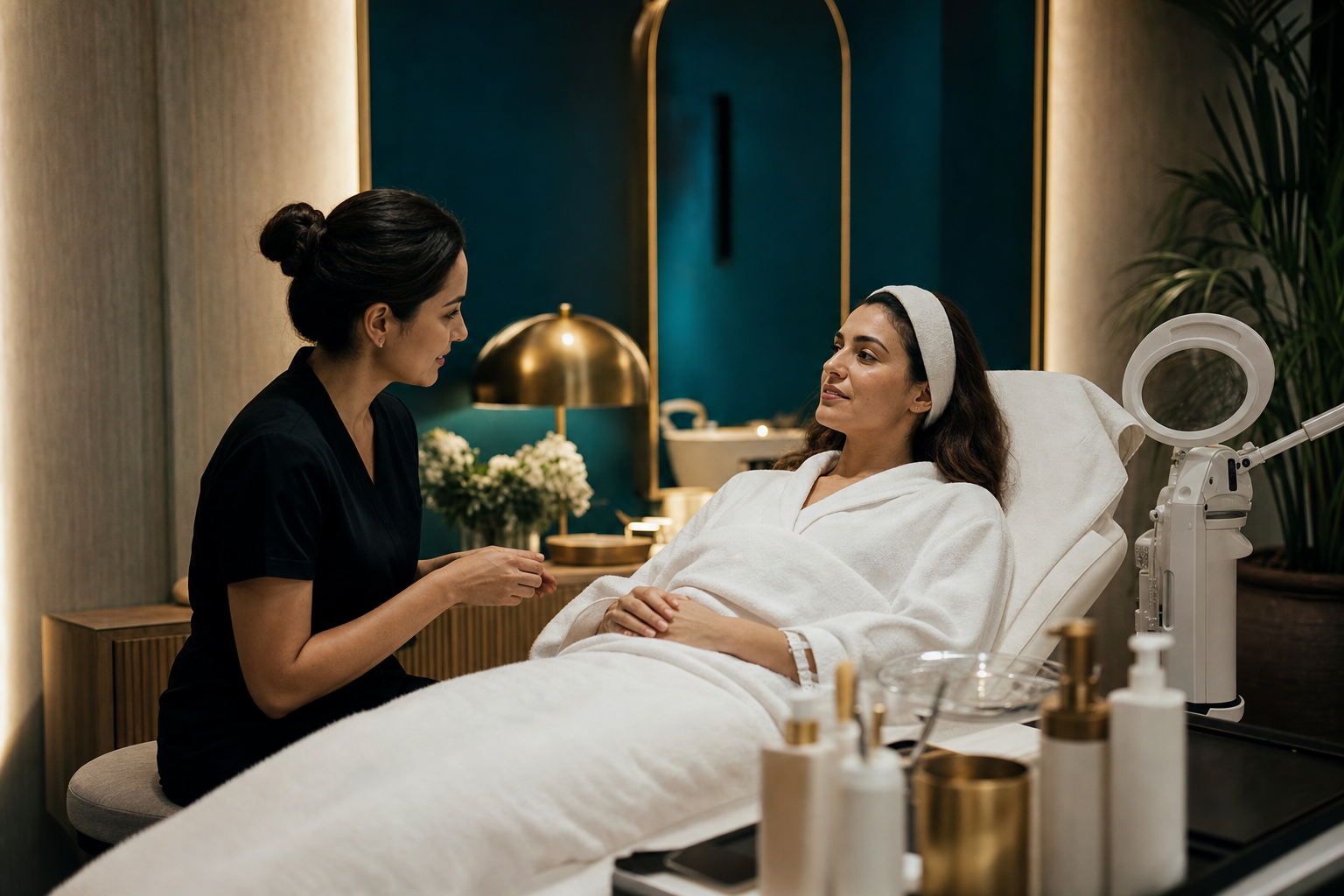

Describe your skin concern plainly
A first facial appointment goes better when the patient names the concern: dullness, dryness, clogged pores, texture, breakouts, uneven tone, or event preparation.
A plain description helps more than asking for the trendiest facial. Dullness, dryness, breakouts, clogged pores, redness, texture, or event prep all point to different questions about products, technique, sensitivity, and timing.
First-time facial patients should learn how to describe their skin without needing professional vocabulary. That makes the content useful for beginners and helps the clinic avoid guessing from vague words like glow or clean.
Ask about sensitivity and downtime
Patients should ask what the facial may feel like, whether redness or sensitivity is expected, and how close to an event the treatment should be scheduled.
Sensitivity and downtime are not small details for facial patients. A treatment that is fine on an ordinary week may be poorly timed before photos, travel, a wedding, or a work event if redness or dryness is possible.
Timing is especially important because many facial patients book around events. Patients should ask whether redness, dryness, sensitivity, or purging questions need to be asked before scheduling close to photos or travel.
Plan maintenance realistically
Facials are often part of skin maintenance rather than a one-time fix. The clinic can advise whether the patient should space appointments, combine with other services, or wait before adding another treatment.
Maintenance should feel realistic for the patient's skin and schedule. Patients should ask whether they need one treatment, a simple routine, a spaced series, or a pause before layering another service.
Maintenance planning turns the page from a service blurb into a planning guide. Patients should understand whether the first appointment is a reset, a test of sensitivity, or the start of a longer routine.
Skin history matters before product choice
Patients should mention acne history, sensitivity, allergies, recent peels, retinoid use, lasers, injections, sun exposure, and any active irritation before treatment starts.
Skin history changes the plan. Retinoid use, recent peels, lasers, injectables, acne medication, allergies, active irritation, and sun exposure can all affect whether a facial should proceed or be modified.
Skin history gives the page more practical depth. It reminds readers that recent actives, lasers, injectables, peels, acne medication, irritation, and sun exposure can affect treatment selection.
Choose the facial around the concern
A brightening concern, acne concern, texture concern, and hydration concern may point to different facial conversations. The appointment should not begin with the assumption that every facial does the same job.
The concern should guide the facial category. Someone asking about acne support is not asking the same question as someone preparing for glow before photos, and that distinction should be clear.
The concern-based section also prevents every facial from sounding interchangeable. Acne support, brightening, hydration, texture, and event prep should each lead to a more specific conversation.
Ask about visible effects and temporary redness
Some patients want glow the same day, while others are preparing for an event. It is important to ask whether redness, sensitivity, dryness, or purging is possible after the chosen service.
Visible effects should be discussed honestly. Some patients want immediate freshness, while others may need to plan around temporary sensitivity, dryness, or a gradual improvement pattern.
Visible-effect language should stay measured. Patients can hope for fresher-looking skin, but no one should promise glass skin or a guaranteed same-day result.
Coordinate facials with drips or injectables
If a patient is considering facial services plus injectables or glow drips, the clinic should help sequence those appointments. Timing matters when multiple services touch the same event deadline.
Facials also need sequencing when combined with injectables, IV drips, or other aesthetic services. The patient should ask SkinDrip which appointment comes first and how much spacing makes sense.
Sequencing is useful because SkinDrip offers more than one category of service. The patient should ask how facials fit around drips, injectables, or other aesthetic treatments before combining them.
Build a simple maintenance rhythm
The best facial plan is usually easy to maintain. Patients can ask how often to return, what home care matters, and when to reassess instead of adding services.
The best close to this guide is practical: arrive with skin concerns, current products, recent procedures, allergies, and the date of any event. That gives the clinic enough context to recommend a safer first step.
The closing should feel like a prep checklist. Skin concerns, product use, allergies, recent treatments, sensitivity, and event date are the details that make the first appointment safer and more productive.